As you might know, the higher tiers of my Patreon come with a monthly written feedback on one of your pieces.
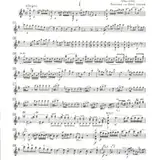
This month, Benjamin Goldman was so kind to allow me to share his piece and the dialogue we had about it.
You can download the MIDI and mp3 file for the track below.
Here's my feedback for it:
First of all: congratulations! This is a very well crafted piece and you captured the style very well. I like your use of colors which show a lot of stylistic understanding for this genre and generally your use of the orchestra and orchestration approach is mostly quite refined and sophisticated. Really well done!
I also really like the production, it sounds very well produced and balanced. Great job on this! There are a few issues on the small scale that I will point out later but personally for me the biggest weakness of this piece is in the larger structure and its lack of development. Don’t get me wrong here, this whole piece feels quite exciting but I feel it’s not going anywhere.
One main reason is the constant return to C major tonality (not the best sounding key for orchestra by the way). I really feel there is room for at least one modulation in this piece, but particularly the triumphant return of the main theme close to the end being presented more or less exactly as its first statement at the beginning just with a little thicker orchestration doesn’t feel like the piece has earned that “triumph”. It rather feels like a “ok, once more”. It definitely is a nice theme but by that time we heard it so many times already exactly in this shape that I personally don’t feel like “Ah yes, there it finally is again!” but more like “Yeah okay, whatever” It’s not just about the key but there are several factors at play here that for me diminish the excitement that this piece could have. As far as I understand it the large form of the piece more or less is an ABA (or AA’A) form where the middle part is a minorized version of the A part.
If we look at it as a story we could say that you introduce the hero, then in the middle part the hero fights with a conflict or a menace and then wins over that and has a triumphant return. Just with that one problem that the Hero doesn’t grow through the conflict, and the conflict is no conflict as it rather is just a “sad version of the Hero”. Here’s a bit food for thought: Why no reharmonized version of the Theme when it returns? Why not introduce a side line there? We all know the theme by now, we need something new, a new musical information that presents it in a new light? While I like the minor version of the theme, I feel the piece is a bit too monothematic. I would propose going for a “real” B section which would also give you a bit more liberty to formulate a stronger contrast. Overall, I feel like that the idea you have for that piece is exactly as it should be but you didn’t translate it boldly enough. I would encourage you to be more adventurous in your approach. Make this piece earn its triumphant ending.
One more thing that I thought was working against the idea behind the piece were the sections where I felt you were treading water. For instance bar 13, that Eb would be great and a new “level” but unfortunately you just used that chord two bars earlier which in this case feels like you want to open up a new chapter of the story but just repeat what has just been said. But there are also a few sections where I feel like they just could have been cut without loosing anything (bars 31-34, 47-48)
A few small things to have a look at:
bar15 onward: in reality you would need to consider breaths for the woodwinds
bar 19: doubling the horns with Celesta is not doing anything
bar 26: the “fanfare double tongue” in the brass should rather fall into the triplet rhythm, it feels misplaced being 16ths
bar 29/30 is anticlimactic: you establish a raising trumpet line in 27/28 which is just being cut off and the whole energy somehow vanishes
bar 40: small detail and possibly me being oversensitive but that f natural towards the end of the bar in the melody is quite clashy with the underlying f#. I know this is happening every time the theme gets to this point but in the other iterations you don’t let it clash this drastically against the f#.
bar47 onward: the horns that are not playing the melody are rather low and are a bit contrary to the triumphant sound I think you want here. This would rather be an ideal trombone range. Orchestrationally it would also make more sense to put all horns on that line in this part.
Bar 65-66: I feel there’s no more need for the triplet engine, I would leave this chord sustain/crescendo without any more rhythm pulse. It’s the finale after all.
Here is what Ben replied to this:
No worries about any slight delay and thank you so much for taking the time to listen to my piece! I sincerely appreciate the kind words as well as the detailed feedback :)
As for structure, I would tend to agree since the track does not really progress anywhere and is basically just using ternary form as you pointed out. There are definitely spots where modulations and sequences would fit well while also giving me the chance to actually develop the theme harmonically. Right now, things seem to be sticking to a more 'additive' development style where just the orchestration is evolving. In turn, this dampens the final recapitulation and makes it seem repetitive while lacking impact. I think the things you outlined like a re-harmonization, a interesting counter-line, etc. would certainly benefit the piece and give the finale that 'oomph' that everyone is wanting.
Good point about the B section and this can be attributed to a bit of saving time/efficiency. While I do generally like the B theme to share some motivic attributes, this was clearly just a reharmonization which defeats the point altogether.
Concerning orchestration, these are a lot of 'rookie' mistake that stems from a lack of experience writing for live orchestra. For the woodwinds from Bar15 on, would these normally be written as 'tacet' with sets of two passing the figure to each other while dovetailing the line? For the brass double-tongue vs. triplets, you are absolutely right and hearing the piece now makes things sound a bit off in comparison!
My reasoning for not putting all of the horns on the final theme was the strings/choir/high woods were also playing the same line and I felt it just needed a bit of body and did not really need to stand out or overpower anything. Horns 2/4 were used to thicken the harmony and contrast the higher register melody. For this, I will have to re-orchestrate it with your suggestions to hear the difference! Same for removing the triplet/rhythmic engine and if you have any examples of this, that would be great. (similar to this at 4:55 youtu.be/xI1kdVtWKcU?t=293)
Also, good to note about having the melody in the trombones instead of the horns and this makes sense. I have definitely done that in some other pieces and it would give the theme a much brighter, brassier tone. Also, sorry for the C major! As a woodwind player myself, any key is no problem :P In any event, I would love the chance to have my music recorded live some day with amazing musicians instead of samples!
Overall, I think you hit the nail on the coffin with framing the piece as a story. A strong narrative must have strong character, with a strong conflict and long journey before return home with new meaning. Interestingly enough, I actually just started reading up on the story circles from Joseph Campbell in 'The Hero's Journey' and found it to be really helpful. It essentially outlines the exact points you are making about true development, albeit from a literature point of view.
In actuality, this piece was written as part of a trailer music album which is (in part) reason to blame for the static structure and stagnant harmonic development. To be honest, a lot of my work these days is production music and I find the rigidity of the genre to be quite limiting in lieu purely composing for the sake of it. I have even had some of my tracks cut down by publishers to fit into a mold...That said, I am not well-versed in trailer music and could be completely wrong! In your experience, do you ever run into any issues like this and if so, how do you deal with it?
Again, thank you so much for the amazing advice and the generous amount time you gave.
And my reply:
Regarding your questions: Woodwinds in 15 onward: Yes, you can dovetail them into each other. Another option would be to interrupt the figure to allow for breathing, either at the beginning of the bar or the end. Also "randomizing" that gap between all players (like staggered breathing with choir) would also work. Generally you could also leave it as is and your players would sneak in a breath (leaving out occasional notes) but the more professional approach would be to include breathing into your thought process.
Regarding Trombones I think you misunderstood me: Yes, it would of course also be possible to put that theme on the trombones, however this point was more targeted to the fact that you supporting harmony in the lower horns is currently in a register that would be better suited for trombones as horns don't have the brillance and carrying power in this register that is needed for this final thematic statement.
Trailer Music is my personal pet peeve. I tend to avoid writing any production music as it bores me to death. I've done a few "trailer tracks" a few years back (which annoyingly are some of my commercially most successful tracks) but I really do not enjoy writing such music so I tend to stay away from it. So unfortunately my experience and possible advice I can give is very limited.