
Brad's Top 10 Games of 2023
Added 2024-01-16 20:39:02 +0000 UTCPlenty has already been said about video gaming in 2023, a year of extremes that saw a historic procession of instant-classic games being released, even as the business itself began to contract so rapidly that thousands of the people behind those games found themselves squeezed right out of their jobs. With ballooning triple-A budgets, mismanagement, and a sudden dire lack of funding for smaller teams, the whole thing is feeling pretty precarious lately. There’s not much more I can add to this lamentable state of affairs, which shows every sign of continuing into the new year, other than to offer condolences and encouragement to devs who are out of work or struggling to get new projects going. It sounds brutal out there.
Well, what better way to recognize all those developers' endless hard work than to laud some of the games that tickled my fancy the most this year? My list is necessarily a little incomplete, as there were several games I had planned to catch up on as the year wound down and then didn’t – primarily, spending more time with Baldur’s Gate 3 and Tears of the Kingdom, and I would’ve dearly loved to finish Alan Wake II – but the last two months of the year were marred by a series of health crises in my family (yet another one of which, somehow, is unfolding as I’m writing this) that made it difficult to focus much on games. I hesitate to bring this sort of thing up, and in general the public/private divide has always been the toughest aspect of this job for me, as someone whose need to guard my personal life borders on pathological. But I guess at some point you can’t bottle everything up without risking giving the wrong impression. How to explain that you aren’t all there without actually being able to explain it?
At any rate, thanks for sticking with us. A big thanks as always to everyone who has supported us and continues to keep us going – I wish I could think of a less obvious way to say it, but we couldn’t (and wouldn’t) be doing this without you. Now let’s talk about some games.
11. F-Zero 99
I have to give this game special mention here as the first “99” since the Tetris one to actually grab me in a lasting fashion. Large-scale multiplayer is a natural fit with the gameplay of SNES F-Zero – particularly as it always seemed kind of criminal that the original had no multiplayer in the first place – and while the raucous bumper-car free-for-all of racing with 98 other people feels extremely punishing up front, it’s got enough depth of technique to give you plenty of room for improvement as you master the finer points of both the new mechanics and the nuances that always existed in the racing of the original (which I never really appreciated until I played this). Also, it had the bonus effect of getting me back into Tetris 99, which can only be considered another mark in its favor.

10. Theatrhythm Final Bar Line
Yes, it has art like a thousand other mobile games (although apparently it started out in the arcade, of all places), and yes, the rhythm mechanics are as straightforward as it gets, with simple inputs on buttons and analog sticks along a horizontal highway (though it gets plenty challenging on higher difficulties). To be blunt, I’m really just a damn mark for the music of Final Fantasy – it’s not an exaggeration to say listening to the music of Final Fantasy III (now FF6) on the SNES was probably the first time I truly realized a game could make me feel something other than simple excitement or amusement – and this game wraps that music up in a really robust package with a whole lot of fan service. The depth and replayability of being able to level up your characters, assemble parties, set battle strategies and so forth is nice to have, and it has endless unlocks to keep you coming back, but even the core experience of playing all those indelible songs made it a shoo-in on this list. I might have preferred they just use the original pixel art backgrounds and character sprites (and backported the later 3D characters to that style, because that’s always delightful), but then I’m deeply in my nostalgic era and my opinions about old games should probably be taken with some amount of salt.

9. Cocoon
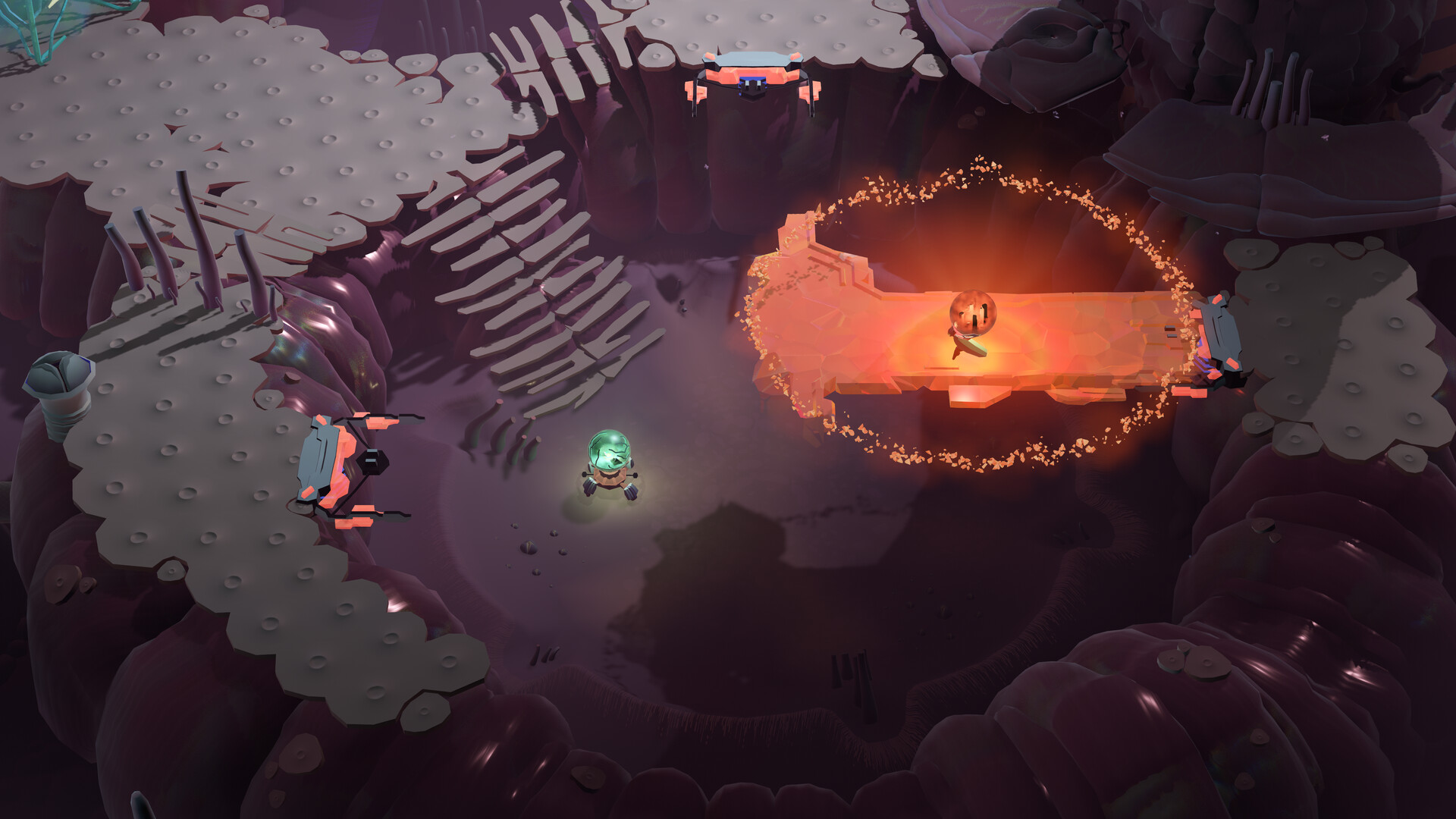
I (still) love Inside so much that I’m constantly on the hunt for anything made by any of the developers of that game, and Cocoon fits surprisingly well in that same highly specific mold of “wordless non-combat puzzle game set in a surreally uncomfortable environment with some unconventional gameplay mechanics.” Specifically, the world-within-a-world gameplay hook grabs your attention immediately with the simple visual flair of instantly zooming in and out of each world, but it’s the way the different worlds – which you can literally carry around on your back in the form of orbs, and nest inside of each other at will – play into the puzzle design that gives this game staying power. It’s also got some of the best environmental and boss animation I’ve seen in forever. Cocoon strikes me as similar to Inside in another way, in that it shows how much detail and craft you can accomplish by investing all your development efforts within a narrowly constrained scope.
8. Final Fantasy XVI
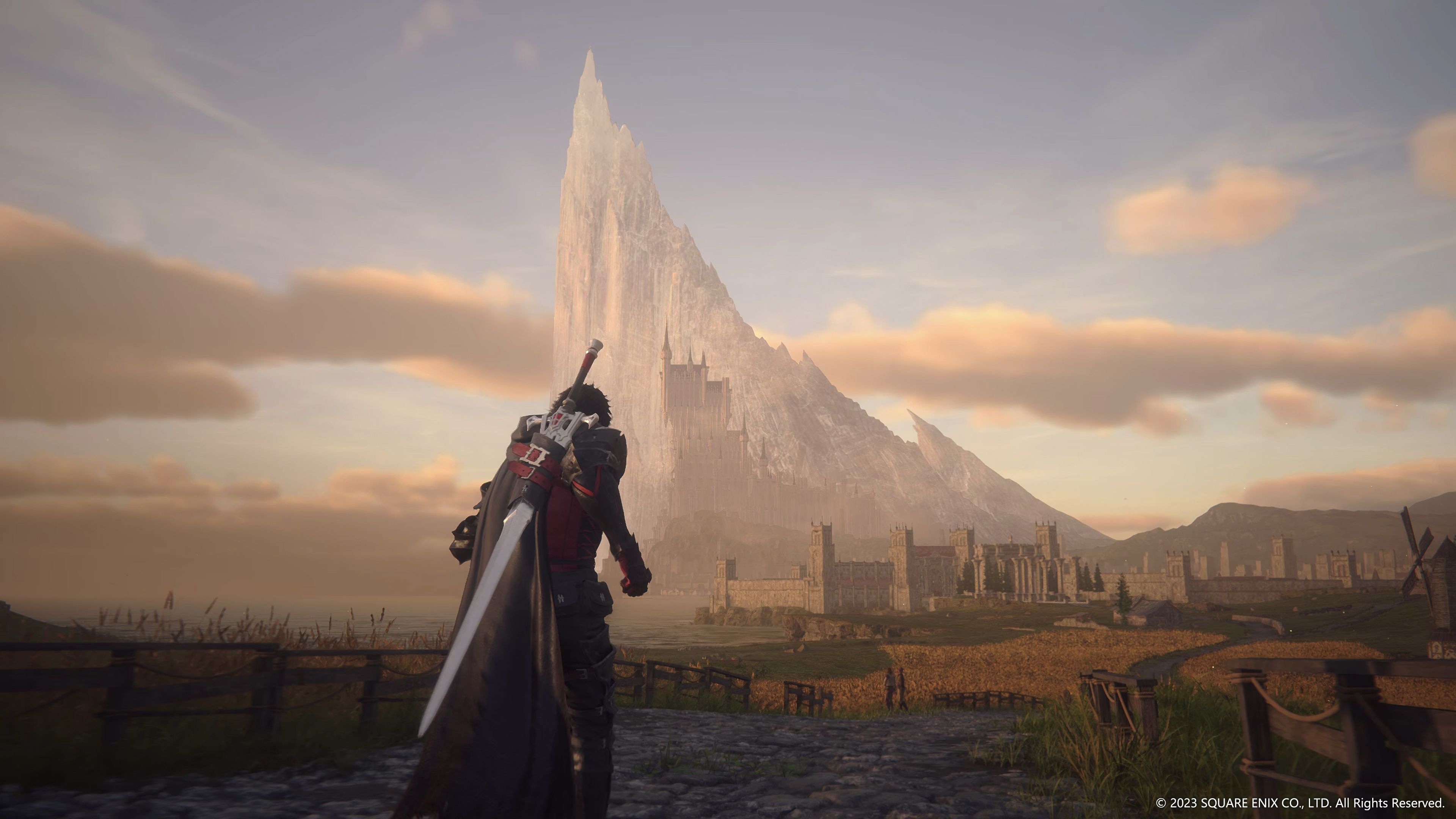
Two Final Fantasy games on my GOTY list was not on my 2023 bingo card, but Square Enix is doing a pretty impressive job of keeping the franchise lively these days, what with pixel remasters, rhythm games, this interesting cross-genre experiment, and the juggernaut that is XIV. (It’s a far cry from the messy, aimless days of Fabula Nova Crystallis, anyway.) It was easy to feel jaded about the overt Game of Thrones influence that Square marketed for XVI prior to release, so it was all the more surprising that the warring kingdoms and political intrigue actually got its hooks into me pretty deeply. Of course, that stuff is really just a backstop for the character melodrama at the heart of this game, which is all the richer since those characters have alter egos as enormous elemental gods that like to destroy everything around them as they work out their interpersonal issues. (This game is probably more anime than I’m willing to admit.) The shift to real-time character action is mostly successful, although I do miss the more traditional turn-based FF combat (especially after XIII’s brilliant tactical format), and the game gets bogged down in some extremely bland side material in between the enormous set-piece clashes of wills, but Ben Starr turned in one of my favorite performances in quite a while here as Clive, and “Press L3 + R3 to Accept the Truth” is simply one of the best moments in recent video game history, let alone in Final Fantasy.
7. Alan Wake II
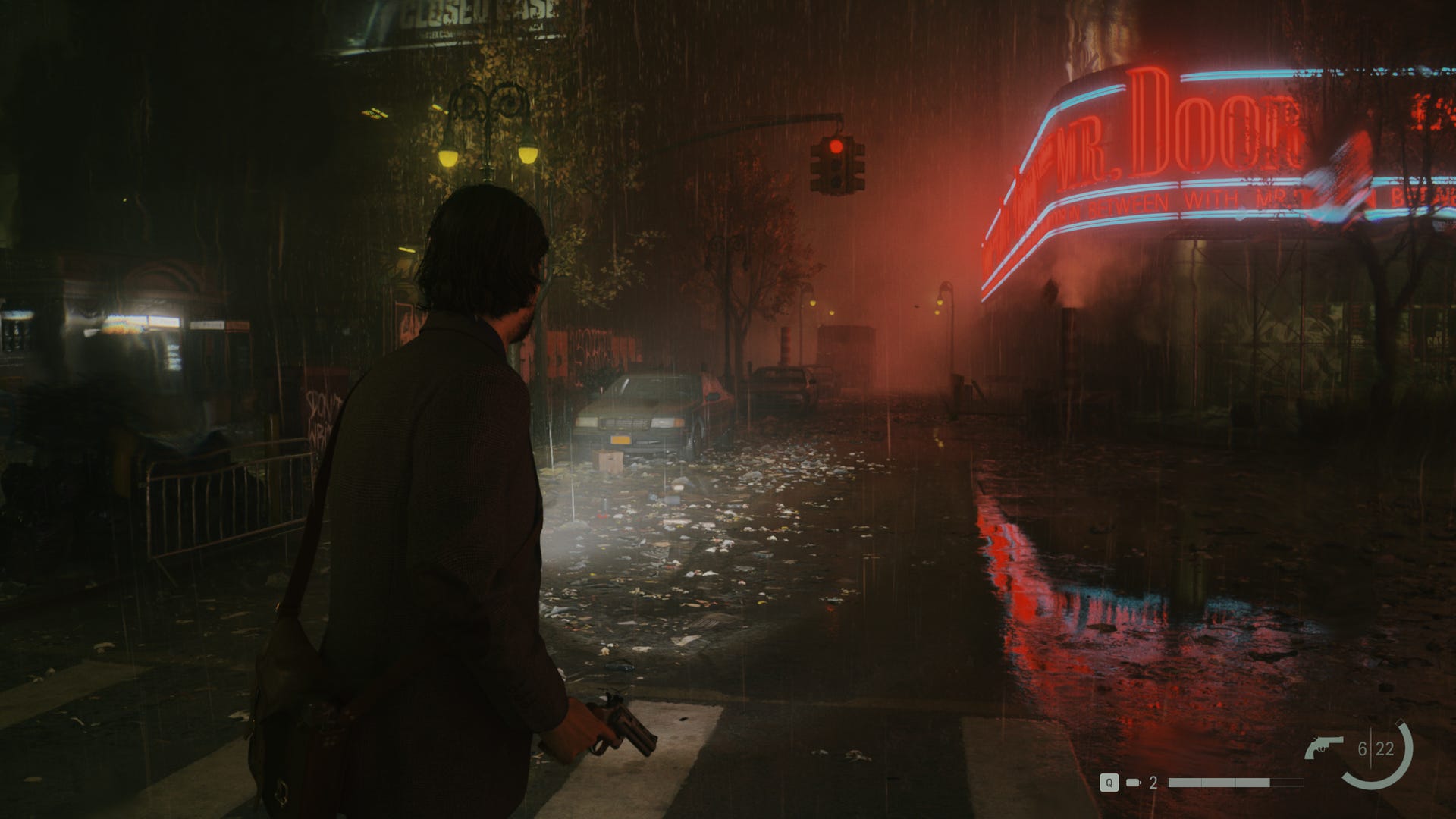
Among the games that fell victim to my distraction by personal issues (not to mention my PC being in pieces for most of November), this one hurts the most, because I was barreling through it and normally wouldn’t have stopped until I’d seen every trick it has up its sleeve. Audacious doesn’t begin to describe the confidence this game has in its eccentric writing, innovative cinematic presentation, and sheer visual design and fidelity. All the tasteful references to the developer’s other games and multilayered metanarrative touches have convinced me that there’s only one “CU” I care about, and it’s the Remedy one. The only thing stopping me from slotting this higher on my list is that I haven’t seen all of it yet, but the several hours I did get into it impressed me more than enough to drop it in here.
6. Dead Space
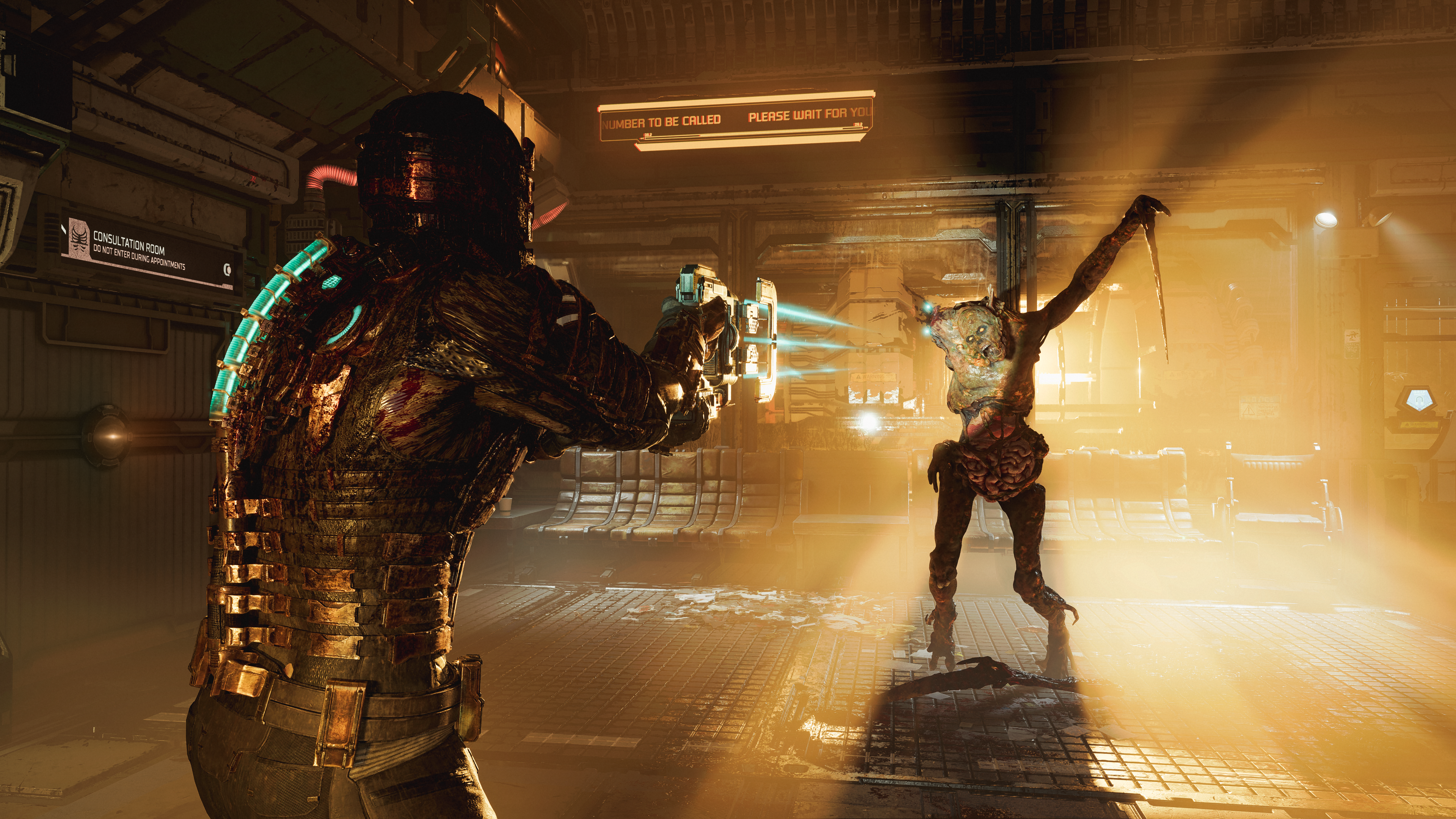
I’m still pretty mixed on the increasing glut of remakes (although they certainly aren’t going away), and in contrast to more dated games like Resident Evil 2, Dead Space is pretty firmly on the “did not need a remake” end of the spectrum, considering the original is still perfectly playable. But the developers went so above and beyond with this one that I just have to give it its due. Smart additions like the new quest system, which gives you a reason to explore and backtrack more around the Ishimura (because every survival horror environment is just a haunted mansion at the end of the day), and the reimagining of the previously abominable asteroid turret bit into a pretty exhilarating new zero-G space walk sequence, gave this remake a more modern feel, and the superbly moody new visuals and sound design certainly didn’t hurt there either. Also, frankly, I think it’s because the original is still so playable that this new version is as great, and as contemporary with new releases, as it is. There’s still nothing quite like the satisfyingly grisly snap of shooting limbs off necromorphs with that plasma cutter.
(Since it was a big Q1 for survival horror remakes this year, I’ll mention here that the Resident Evil 4 one also just narrowly missed making this list, and might in fact have made it if I’d written this on a different day in a different mood.)
5. Lethal Company
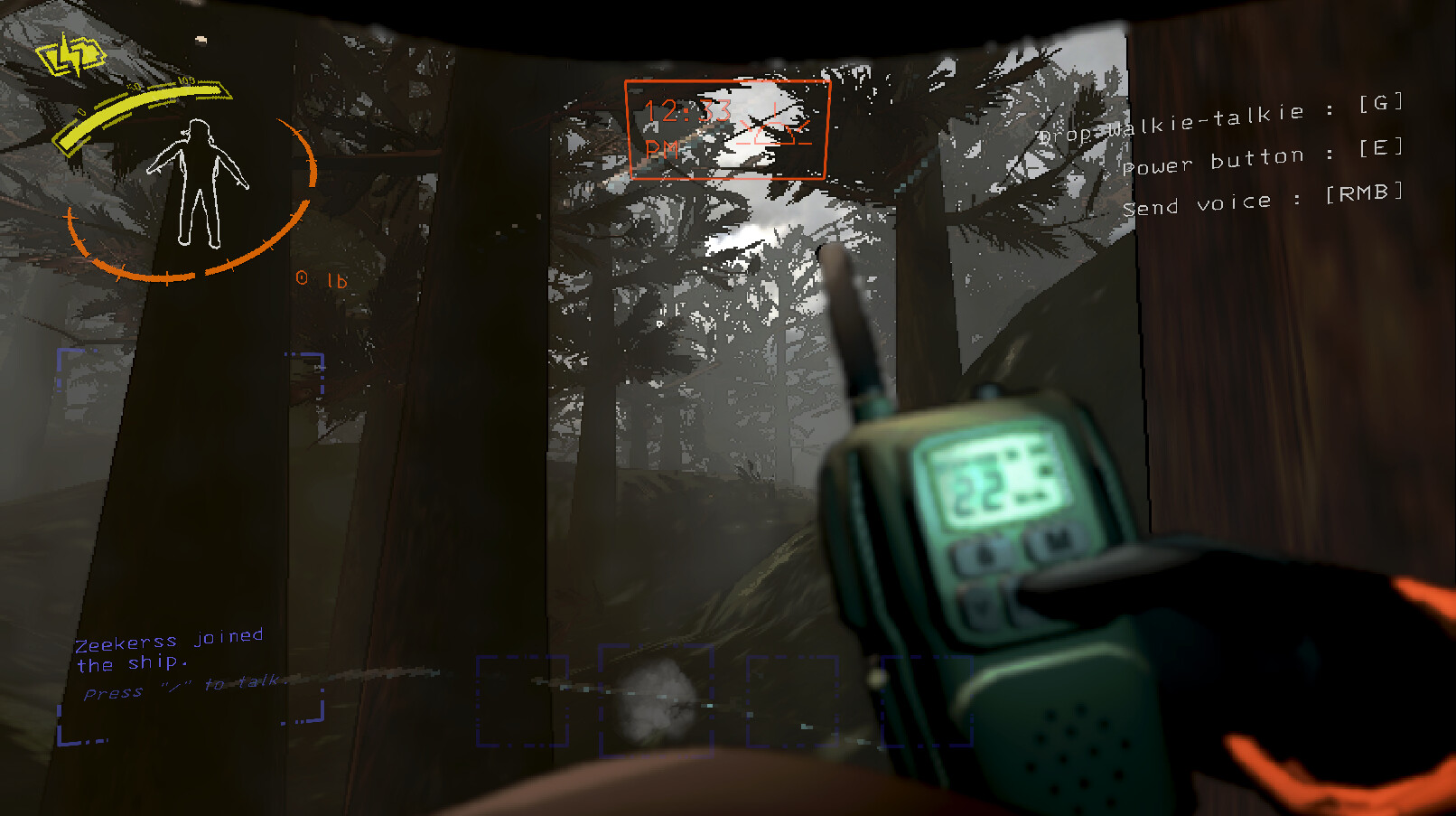
It almost feels risky to include an early access game that’s only been out for a few weeks, and I guess it’s easy to blame my enthusiasm for this unique and bizarre multiplayer thing on recency bias, particularly as it’s joined the ranks of Undertale and Stardew Valley on the short list of runaway indie successes made by lone developers that blew up and sold millions out of nowhere (and thus has a ton of hype around it). But there’s really something special and unique to this game, which is so much more than its simple premise of leading a squad into some derelict facilities and scavenging the scrap inside for money. I feel like I’ve been waiting since the Xbox 360 packed in a headset with every console for a game to use in-game positional voice chat in a truly essential way, and this, finally, is that game, with its endless potential for atmosphere, terror, and comedy, as your friends fall victim to the game’s many horrors and their voice comms reflect their fate. I’m also bullish on the future of this game as one with some staying power (and not just a shallow goof for streamers), because there’s actually quite a bit of skill to playing it well: deciding which items to invest in and how to distribute them among your team, how (or whether) to utilize a commanding officer back on the ship, whether to split your team up, and on and on. The hilarity caught my attention, but the surprising depth is what’s keeping me eager to keep coming back to it and share it with more of my friends.
4. The Exit 8
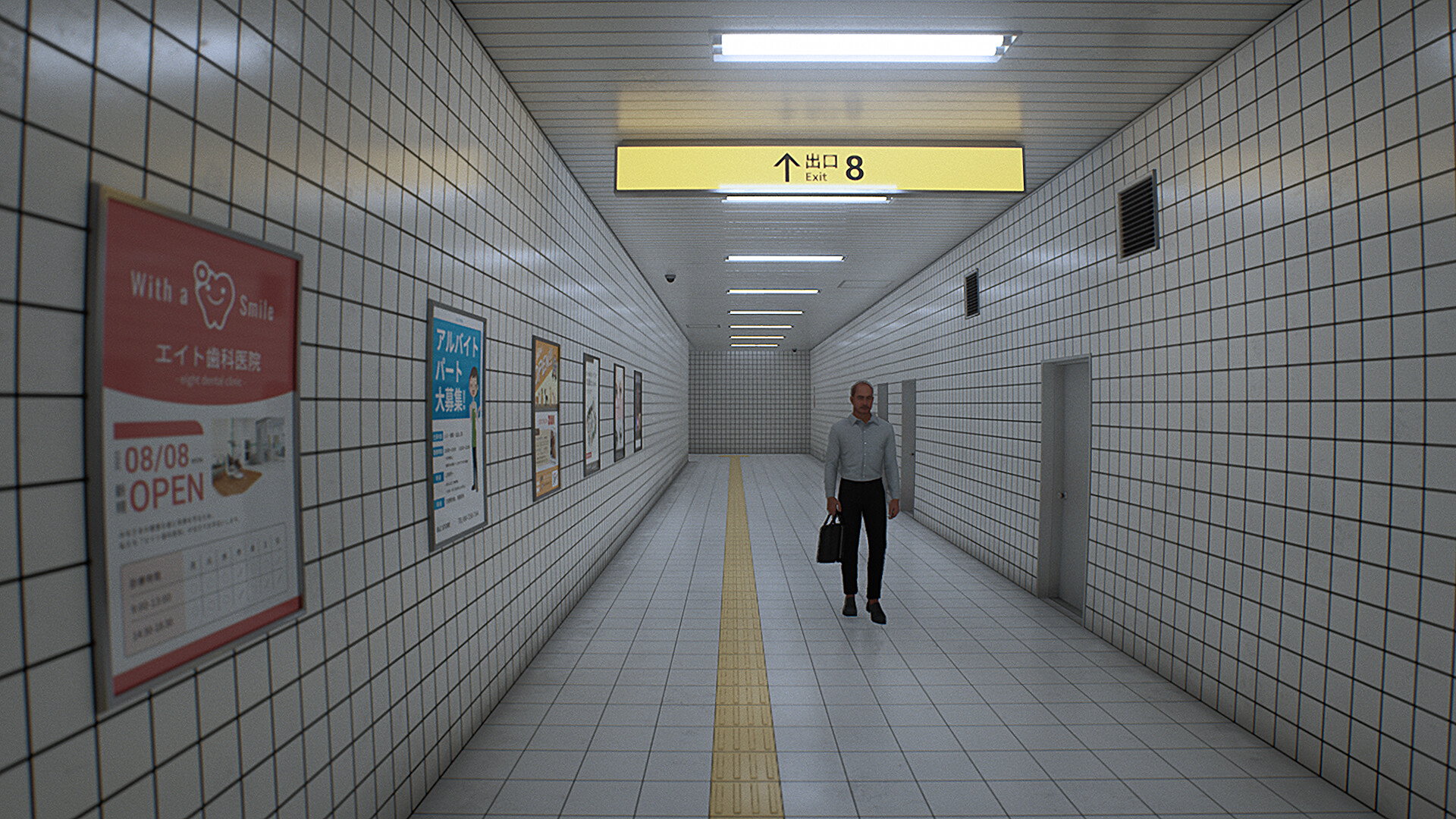
To be honest, I came to this game for no other reason than the startlingly lifelike rendering quality of its lone subway passage that I’d seen in screenshots. Then once I dug into it, I wondered if I’d gotten into some kind of creepypasta-adjacent jump scare thing that I’m 30 years too old for, but I quickly realized this short but utterly engrossing experience expertly marries the sort of guilty pleasure of a spot-the-difference photo hunt game with the purgatorial monotony of plodding through endless underground subway halls, and suffuses the whole thing with a disorienting sense of dread. (Again, the shockingly realistic graphics with the fisheye sort of lens and overbright fluorescent lights really add to the effect.) I still have almost no sense of who made this impressive little thing, but the fact that a hidden $4 gem like this can pop up out of nowhere says some positive things about where video games are at these days.
3. Marvel’s Spider-Man 2
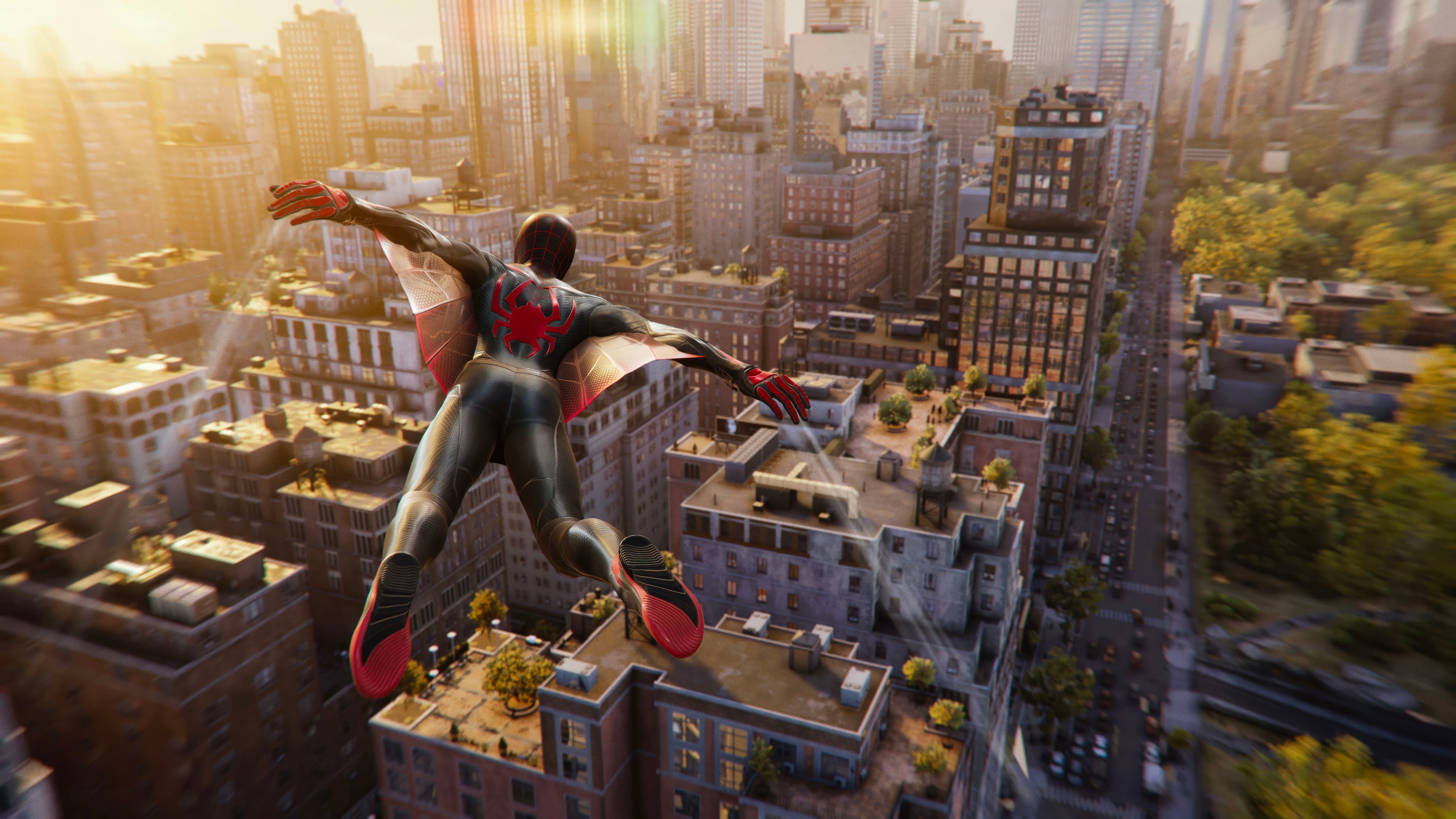
It sounds weird to say, but this might be the biggest surprise of the year for me, given how fast I went from questioning whether I even needed to play a third Insomniac Spider-Man to being unable to stop playing this third Insomniac Spider-Man. They kind of threw everything but the kitchen sink into this, with two playable characters each with their own huge array of unique and highly satisfying abilities, and their own interweaving storylines (plus, you know, Venom). Frankly it’s a testament to how well Insomniac juggled everything they included here that it only briefly feels like it isn’t spinning every plate perfectly at the same time, when the story deemphasizes Miles for a bit to focus on Peter. This is just meat-and-potatoes open world video game fun at its best – the exaggerated rendering of New York has never looked better, and it’s never been more fun to fly and swing around in. With both a lavishly produced main storyline and even a set of consistently rewarding side missions that make the cartoonish super hero stuff alluring even for someone like me who’s explicitly not a comic book fan, it’s pretty obvious why I didn’t put this down till I’d done everything there was to do in it.
2. Viewfinder
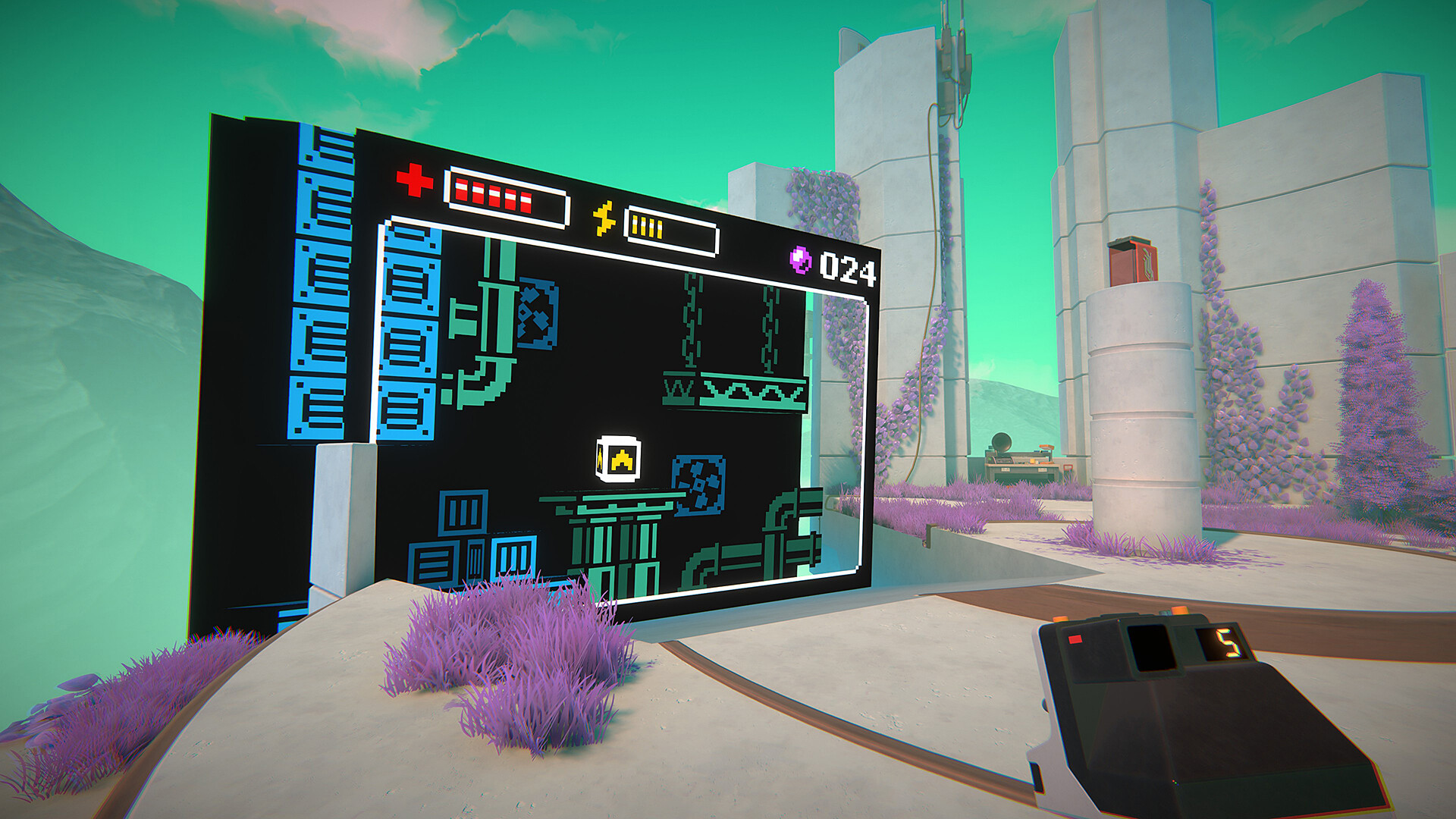
Is it OK to do the quirky-first-person-puzzle-rooms-with-narrated-story thing again? Have we wrapped back around to those being cool? Actually, it doesn’t matter; Viewfinder is good enough to single-handedly bring that style of game back into vogue (if it was ever out in the first place). The story, loosely told, of an attempt by a team of scientists within a virtual world to fix the ravaged climate of a very real world, is perfectly adequate and affecting enough. But it’s the startling gameplay mechanics, and the consistent inventiveness and personality of the puzzle design, that makes this game unmissable. It just never gets old, being able to take pictures of the world around you via a magic Polaroid camera, then overlay those pictures on top of other areas to recreate new, navigable level geometry of the thing you photographed. The game builds on that core concept steadily and cleverly as you make your way toward the end, and it wastes no opportunity to inject quirky little asides into the puzzles that recall retro video games and computing in some delightfully kitschy ways. This is a relatively brief, breezy game that you really just need to play for yourself to appreciate how superbly designed it is.
1. Remnant II
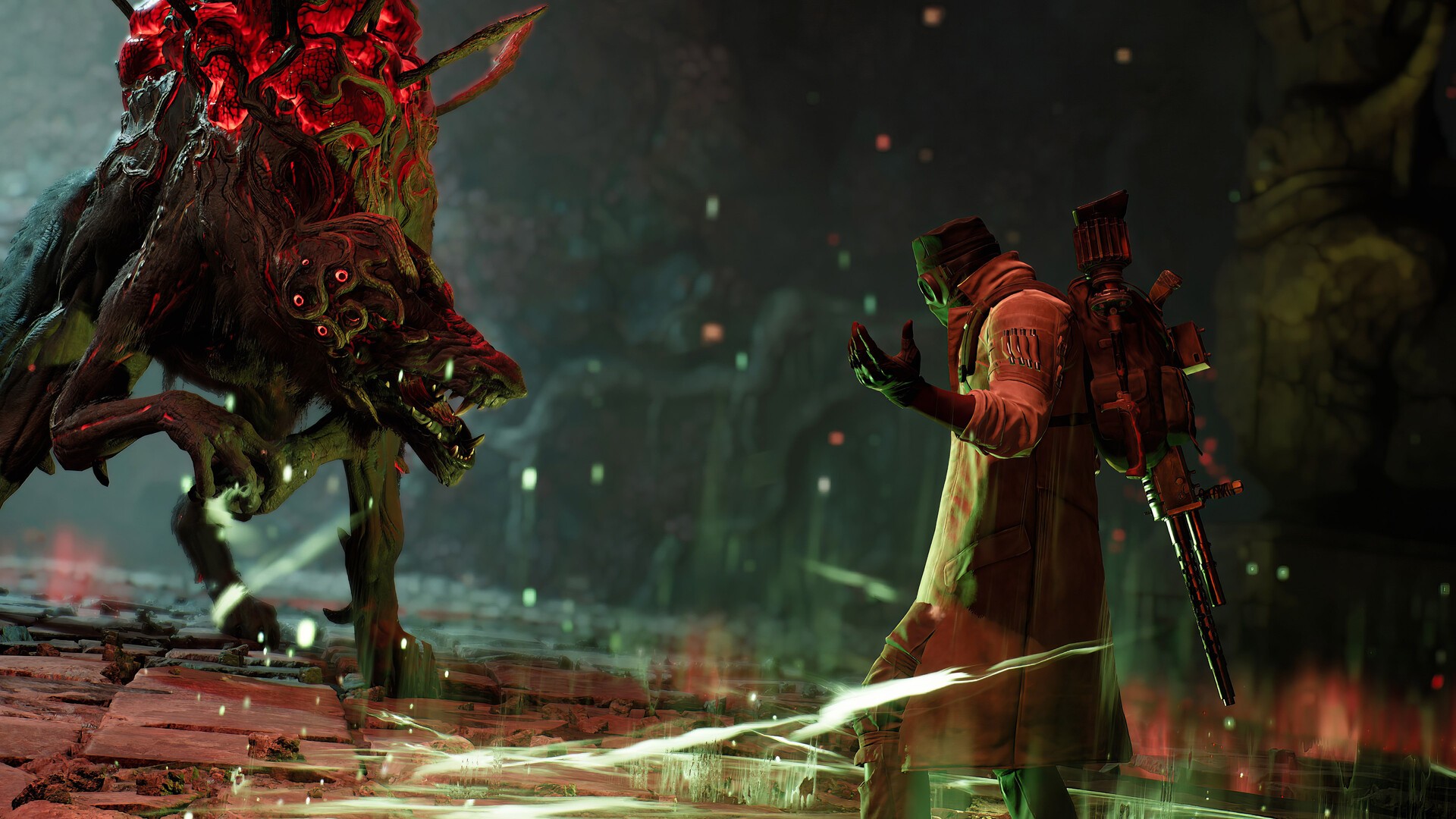
If there were a “most improved” sort of award to dole out here, Remnant II would take it hands down. I enjoyed the first game well enough, which was a decent first attempt at marrying the ins and outs of a Souls game with traditional third-person shooting, but I just wasn’t prepared for how much more elaborate and how much weirder they got with this sequel. This game is such a great blend of everything I love about the Souls games (environment design, bosses, character leveling mechanics, bonfires, secrets), Destiny (bizarre guns, exceptionally satisfying shooting, repeatable activities that you can learn inside out), and MMOs (a ton of class diversity that all synergizes together really well in multiplayer). The randomized nature of each run through the game adds a mystique to what content you are and aren’t seeing that makes you want to compare notes with friends; it’s such a bold design choice that by the time you’ve finished it once you’ve only seen roughly half of the world design and story the game has to offer. I got all the way down the rabbit hole of trawling wikis and comment sections in an effort to uncover some of the deepest secrets and get the best items; digging that deeply into a game is its own brand of rewarding, and showing up on the streams we did with a bunch of new, rare gear made me recall the bragging rights of WOW raids in a way I haven’t since the mid-2000s. Remnant II feels like it captures the best aspects of live service games without actually being a live service game, which is an accomplishment in itself, and I really hope Gunfire gets to continue in this direction, because there isn’t anything else out there in recent memory that intersects this many of my tastes and interests in such a precise way.
Comments
I really enjoy reading these! Thank you Nextlander for putting in the effort. Hope this year is better for everyone health wise!
Castor Troy
2024-01-18 01:03:10 +0000 UTCHell yeah, Theatrhythm.
csl316
2024-01-17 20:31:48 +0000 UTC