
Hi all,
By request, here's some screen shots of VISION 4X on the previous quick tip video, kind of spelling out what's going on here.
Again, this is mainly for dance music - rock wouldn't be mixed like this which is why when you go on "Mix With The Masters" and all that stuff you won't see guys getting into this level of detail. That said, mixing low end in dance music is EVERYTHING - whereas in pop/rock/radio music, a LOT of effort is put onto vocal processing the same way we obsess over the low end. Okay, let's move to the good stuff.
There are three MAIN factors in your kick/bass relationship - and they're not something a magic wand plugin can necessarily "fix" in one click.
1. Timing - the timing of kick/bass and the sidechain that goes with it is all "time" based.
Longer KICK - longer sidechain needed to move the bass out of the way of the kick.
Shorter kick = shorter sidechain release time. More emphasis on the bassline sub, less on the kick.
Kick timing, sidechain timing are your elements to play with here. Both affect not only the technical side of a production, but also the creative side - it would be a little unorthodox to produce a Hard Techno song with a super short kick, but in DNB, shorter kicks will fit you right in.
Here is a screen shot of VISION 4X showing my sidechain release being too short, you'll see a build-up of bass where the kick and bass meet.
This fed into a hardclipper or limiter will likely result in a chunk of distortion when pushed.

When I raise the SC release timing higher, it looks more like the next image. I can now raise my basses in volume if it makes sense to my ears, and I can achieve a mix that looks like it's fed into a ton of limiting since it'll be a brick, but with no limiting used :)
Creatively, this will sound more "pumpy" - so if I want to avoid that, I'll go back and shorten the kick a bit.
Take a look at good sidechain timing. Now imagine feeding that into a limiter - easy loudness (note, it's just a kick and bass, adding vocals/more drums will result in more peaks)

#2 - PHASE.
Okay, this one is a little more tricky and it's what I discussed in my recent quick tip.
The easiest way to tackle what this means to you is: If you have two sine waves, and they are both opposites of each other, they will cancel each other out to silence.
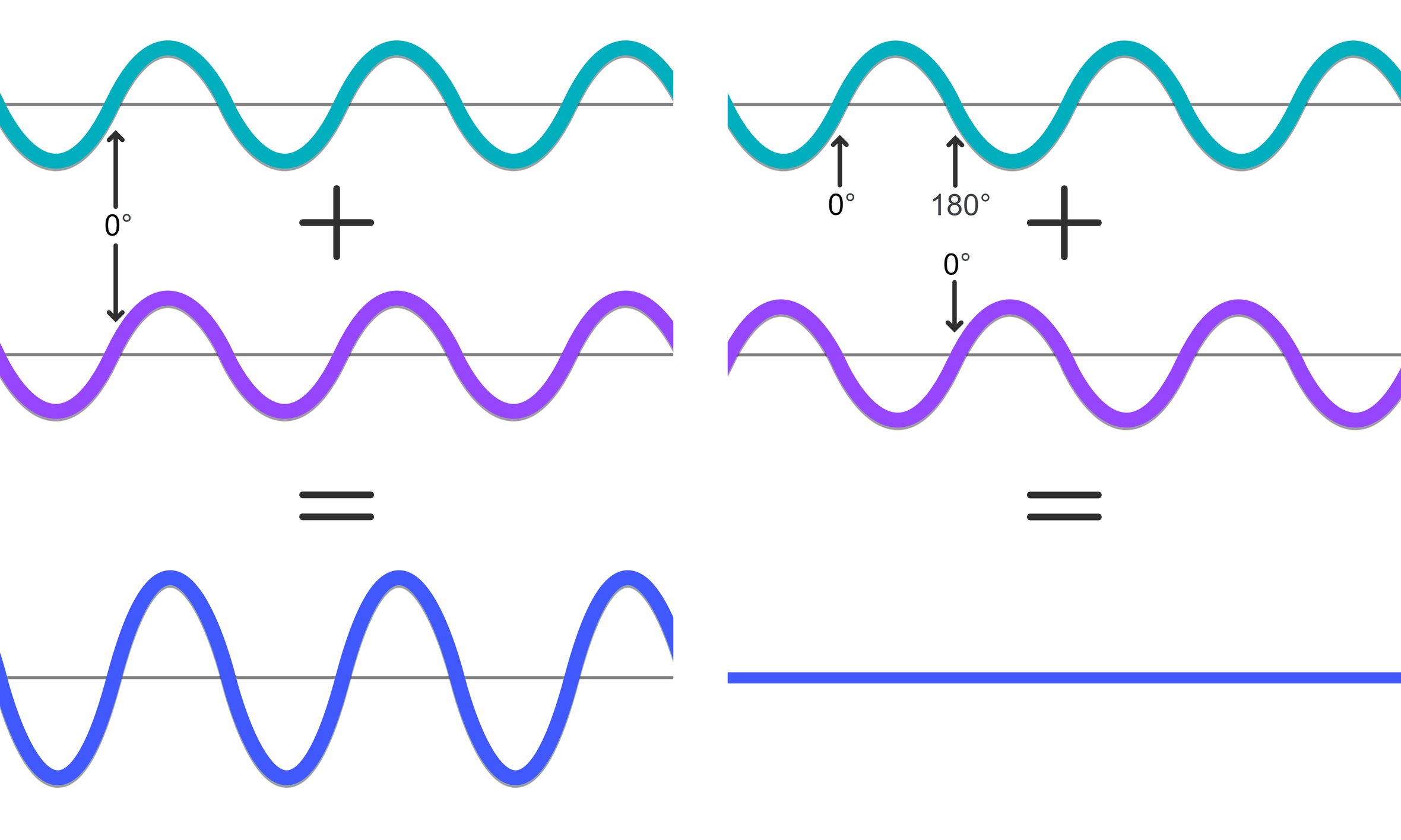
Left side - two happy in-phase sine waves adding to one bigger sine wave.
Right Side - two opposites becoming silence when added together. This is textbook phase cancelation.
The same cancelation can happen to your low end, and it probably does often if you're not adjusting for it. Then your instinct is "my low end isn't hitting like my references" and you EQ more sub in, and now you're chasing distortion down and blaming it on your limiter not being "good enough".
The reality is, you can't "EQ it in" because it's not there to begin with. This will mess with you even more, because when you solo your bass, it feels big and comparable to the reference stems.
It's phasing, and you are chasing your tail because of it.
Here is a screen shot. The first kick and bass is properly aligned in all ways - timing, tuning and phase. The second kick looks tuned right but when the kick hits, you can see the bass simply disappear when the kick hits.
This is because the waveforms are phasing, and as a result cancel each other out. You can see it happen on the third kick as well.

The below image is how it looks after I adjusted it in the QUICK TIP video, I used disperser, but you can also fix it by using the phase knob in your synth.
Now very important - note a lot of synths like Serum start with RANDOM on - which means the phase randomly begins. You'll be chasing your tail if you don't shut that off. For a reese or something that requires it, consider a bounce to audio.
Fixed phase, note second kick now is full. This comes from just a small addition of disperser. Look at all that bass that showed up :)

Thirdly, tuning is also important.
Note - I don't tune my kicks into a "key" - I think it sounds weird to have a kick at a solid note. Mine tend to pitch bend all the way down so they aren't a distinguishable note and I make them in Kick 2/Kick 3 typically. There is a video on this if you backtrack a bit.
That said, playing with the tuning of the kick WILL alter all of your kick/bass relationships, so I'd start by messing with the kick tail a touch and see if you can get it to align. If you're using a sample, start with playing with the tuning and length.
If you're in KICK 2, you get a LOT of control and can really get your hands dirty.
I like to start with getting my kick tuned as closely as I can to make the notes "work". You can get a visual of where the kick tail should land using the spectrogram (this is the heat map looking thing above in Vision 4X).
Note how my tail ends up right about where the bass begins - this is what you're looking for ideally.
All in all, a good low end looks like that last screen shot roughly speaking. And last note - when you change NOTES in a drop all of this will go to shit as you're tuning it all for a one-note drop. You can go reference my quick tip where I map velocity to my phase on Serum to try and align it (I did this in my Odesza remix) if you really want to get crazy.
That all said, chasing perfection isn't the way to make great art. I'm just hoping you can get a better low end by building this into your workflow toward the end of finishing your music. This seems like a lot, but I usually tackle it when I'm done with a tune, in a few minutes time.
Cheers!
Jaime Villalvazo
2025-05-06 22:50:31 +0000 UTCAsh Espree
2025-03-22 17:00:45 +0000 UTC