A Song of Scale and Shadow - Chapter - 1
Added 2025-06-25 18:01:13 +0000 UTCThe forest was thick with the life of early summer—birds calling in a dozen tones, insects buzzing lazily in the air, and small creatures darting beneath ferns and fallen logs. Sunlight filtered through the dense canopy in golden shafts, dappling the earth below in a slow, shifting dance. Among the underbrush, a rabbit ambled forward, its twitching nose brushing against damp leaves. It walked with casual boldness, as if it had long claimed this patch of woods as its own. The creature paused near a half-rotted log, nibbling on a broad leaf torn from a storm-toppled tree. All around were signs of recent tempests—splintered branches, fallen trunks, and patches of moss where sunlight now reached the ground. But peace never lasted long.
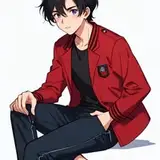
With a whisper of motion, an arrow tore through the air and struck the rabbit square in the side. The animal gave a single shudder, then lay still. The arrow was crude—its shaft uneven, its fletching made from the white feathers of a barnyard chicken. A heartbeat later, the underbrush parted as a boy emerged, dressed in patched cloth and mud-caked boots. He let out a breath of relief as he knelt beside the rabbit. “Finally,” he muttered, brushing a lock of dark, sweat-matted hair from his brow. “That’s dinner, at least.”
The boy couldn’t have been older than fifteen. Thin from long days and meager meals, but wiry and strong in the way of someone who had learned to survive as a peasent. His name was Eragon, and though he looked like any other peasant boy scraping a living from the forest’s edge, there was something in the way he held the rabbit—respectful, grateful—that hinted at a quiet depth buried beneath the surface.
Eragon was not a hunter by tradition or training—he was a hunter out of necessity. Life in the Carvahall's shadow offered little room for luxury, and even less for choice. His uncle, Garrow, worked a modest farm that clung stubbornly to the edge of Palancar Valley, coaxing meager crops from soil that had long ago given up its richness. But Eragon had always known, deep in his bones, that farming was not for him. The furrows, the fences, the silent rhythm of tilling and planting—none of it stirred his blood. And though he lived under Uncle Garrow’s roof and ate by his fire, he had long resigned himself to finding his own way.
His cousin Roran, a few years older and broader in the shoulders, was the natural heir to the farm. Even Uncle Garrow seemed to understand this, never pressing Eragon to take up a hoe or mend a fence. Perhaps his uncle had known, even before Eragon did, that his path would veer from theirs. These days, Roran worked at Horst’s smithy in Carvahall, earning coin and learning a real trade—something useful, something solid. The farm only had work enough for one pair of hands, and Garrow had quietly let Eragon go his own way.
So Eragon had turned to the woods. He’d shaped his first bow with a borrowed knife and strung it with horsehair he’d found near the tannery. His arrows were crude but flew true enough when hunger was the reward. The rabbits he carried now would last only a day, maybe two if they stretched it with stew. But what he truly hoped for—what he needed—was something larger. An elk, perhaps. Meat enough to fill their cellar and spare them another costly trip to Sloan’s butcher shop. Times were tightening. The harvest had been thin. And in the quiet way of men who don’t speak of worry, his uncle had started eating less at the table.
As the sun dipped behind the jagged teeth of the Spine, Eragon emerged from the forest, three rabbits hanging from his belt by a loop of twine. The path to Garrow’s cabin wound along a rocky ridge, overlooking the gentle sprawl of Carvahall in the valley below. Their cottage stood on the outskirts—more worn than weathered, a squat structure of timber and stone that bore the scars of many seasons. The roof sagged slightly at one corner where it had been patched after the last storm, the fresh wooden planks lighter than the rest, still unweathered by rain or sun. Eragon paused to glance up at it, silently grateful it had held through the recent winds.
When he stepped through the gate and into the small yard, Garrow was already outside chopping firewood. His uncle looked up, eyes narrowing briefly before softening. “Three rabbits?” he asked with a raised brow, voice rough but warm. “That’ll do us well for couple of days.”
“They’re lean,” Eragon replied, unslinging the rabbits. “But they’ll stew fine.”
By the time Roran returned from the smithy, his hands were blackened with soot and his face streaked with sweat, but his spirits rose at the sight of fresh game. “Finally,” he grinned. “I was beginning to think I’d have to cook stones.”
Roran, for all his strength, had a surprising hand in the kitchen. He cleaned the rabbits with practiced ease, tossing the scraps to the hens out back, and soon the open-air hearth behind the cottage roared to life. A pot hung from its iron hook, already bubbling with potatoes and onions drawn from their dwindling storage. The scent of rabbit stew filled the cool evening air, drawing a rare sense of comfort over the small household.
Inside, they laid out flatbread on the table, cracked wooden bowls, and a jug of water chilled from the well. As the three sat down to eat, Eragon let out a breath he hadn’t realized he was holding. Warmth, food, and laughter—even brief—were luxuries.
When the bowls had been scraped clean, Roran reached into his satchel and pulled out a small cloth bundle. “Made these for you,” he said, sliding it across the table. “Figured you could use more than two.”
Eragon unwrapped it carefully, eyes widening at the five steel arrowheads nestled inside. Forged clean and sharp, with a slight gleam from the firelight, they were far better than anything he’d ever scrounged. He looked up, grinning. “Thank you, Roran. These’ll make a real difference.”
“I figured,” Roran said with a shrug, already reaching for another piece of bread. “You keep bringing dinner, I’ll keep making arrows.”
As they finished their meal and the fire settled into glowing embers, Roran leaned back in his chair and wiped his hands on a cloth. “Traders passed through Carvahall today,” he said, a grin tugging at his lips. “A group from Ceunon. They had their usual boats loaded down with seeds, livestock, cloth, and a few crates of metal ore for Horst.”
Eragon looked up with interest, though not surprise. The traders from Ceunon came every year, following the Anora River once the thaw began. It was a seasonal rhythm as familiar as planting and harvest. They would return again and again through spring and summer, selling what the north could spare and buying what the mountains could not provide.
“They had a fox with fur red as fire,” Roran continued, amused. “Said it was just a charm for luck, not for sale. One of them told me he’d seen a city where people ride birds bigger than ponies. Swore on his boots it was true.”
Garrow gave a quiet snort as he scraped the last of the stew from his bowl. “They always do,” he muttered.
“Still,” Roran added, “they’re looking to buy in bulk. Big orders of grain and dried meat, things we don’t have much of. Horst says he’ll strike a good deal with their iron ingots. They’re better quality than what he gets from the local mines.”
Eragon leaned forward slightly. “So nothing for us, then.”
Garrow shook his head. “Not unless we suddenly start farming fields we don’t have. They want surplus, and we barely scrape enough for winter as it is. Let the traders fill their wagons with someone else’s excess.”
The very next morning, Eragon was already at work. With five new arrowheads in hand, he ventured back into the woods—not to hunt, but to search for straight, flexible shafts of wood that could be shaped into proper arrows. He walked with careful eyes, testing each branch between his fingers, judging their weight and resilience. By midday, he had gathered enough, and he sat beneath a birch tree, whittling each shaft to the right shape, smoothing the surface, notching the ends. Feathers from old chickens—gathered from the coop behind the cabin—served for fletching, and by evening, he had five sharp, balanced arrows laid across his lap. Holding one up to the light, Eragon allowed himself a small smile. These were far better than his usual makeshift ones. With arrows like these, his range would be better, his shots truer.
And with that came a bold idea—one he had entertained many times but never acted upon.
The Spine.
That great, jagged mountain ridge loomed just west of Carvahall, casting long shadows over the land like the backs of ancient beasts. It stretched from the horizon like the spine of some slumbering titan, its peaks lost in mist and myth. Few dared to venture there. The villagers whispered of curses, of strange creatures, of spirits that lured men to their deaths. Stories passed from grandmothers to grandchildren in the firelight, warnings wrapped in superstition.
But Eragon had never put much stock in such tales.
He believed in what he could see and touch—and the Spine, for all its menace, was just a mountain. A wild place, yes, but one filled with game untouched by others. If he was going to hunt something big—deer, boar, maybe even elk—then that was where he’d find it.
And now that he had proper arrows in hand, there was no excuse left.
It was time.
Eragon told no one of his plan to enter the Spine—no one but Roran. Garrow, for all his quiet strength, was a cautious man, and deeply protective of the boy he’d raised. Though Eragon was his sister's son, many in similar straits would have sent such a burden elsewhere, or left him to the mercy of the village. But not Garrow. He had taken Eragon in, raised him like blood, sheltered him through hard winters and lean harvests. His affection was not spoken aloud, but it ran deep, and Eragon knew well that if his uncle heard a word about the Spine, he’d forbid it outright.
Roran, on the other hand, listened with wide eyes and barely contained excitement. “The Spine?” he’d whispered, glancing toward the house as if Garrow might overhear through the walls. “You’re serious?”
Eragon nodded, gripping one of his new arrows. “It’s the only place left untouched. No one hunts there.”
“That’s because they think it’s cursed,” Roran said, though without conviction. He paused, then grinned. “Wish I could come with you.”
“But Horst wouldn’t spare you from the forge,” Eragon replied. They both knew it was true. Roran was earning real coin now, and Garrow needed every bit of it.
“Still,” Roran muttered, rubbing the back of his neck, “I’ll make you something to take.”
That evening, as the sun dropped behind the jagged peaks of the Spine, Roran worked in the small kitchen by candlelight, preparing flatbread that would last for days. He wrapped them tightly in cloth, packing them beside a pouch of dried herbs and a wedge of hard cheese. Garrow, unaware of Eragon’s full plan, still insisted the boy be well-prepared for his “longer hunt” and gave him the old firesteel, a weathered tent that had long gathered dust in the storage shed, and a small but sturdy axe for firewood.
By dawn, Eragon stood at the edge of the yard, his pack slung across his shoulder and bow in hand. With the jagged mountains of the Spine looming in the distance, shrouded in morning mist, he took a final glance at the cottage that had been his home for as long as he could remember.
And then he turned toward the unknown, toward the silent, haunted peaks, where no sane man dared tread—and began his journey.